Which paraffin wax specifications should a maker check before choosing it for a candle, cosmetic or coating? Is the melting range suitable, and what confirms suitability for the intended application? Start with the product’s specifications and intended-use documentation. Treat heating precautions as a separate decision from finished-product performance.
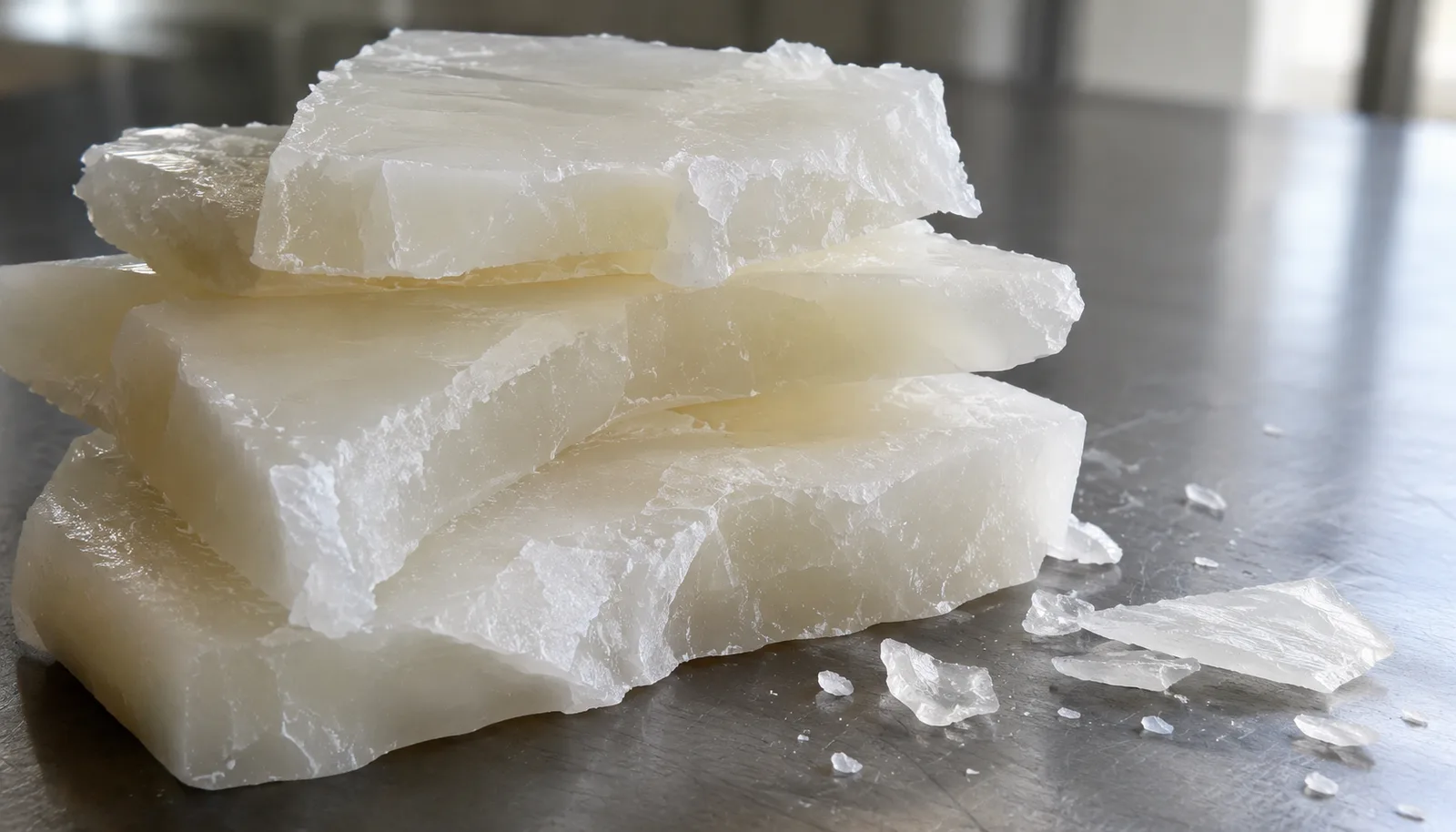
The ILO and WHO International Chemical Safety Card, dated August 2003, describes paraffin wax as an odourless, colourless-to-cream crystalline solid obtained from petroleum fractions. It lists a melting point of 50–57°C and identifies the substance as combustible. Those details provide a handling reference; application-specific questions still need answers for the wax being considered.
1. Candle making: check the formulation before heating
For a proposed candle project, begin with a practical question: what does the wax’s supplier specify for the intended candle design? Request the melting range and formulation instructions for the particular product. Keep any proposed fragrance, colouring and other ingredients within that same discussion rather than choosing a heating temperature from a general description.
The ILO and WHO card lists a melting point of 50–57°C and a flash point of 199°C, measured by a closed-cup method. It also identifies paraffin wax as combustible. The flash point should not become a target processing temperature; ask for the product’s processing instructions instead. ILO and WHO safety card
A useful planning check is to write down the wax specification, proposed recipe and heating instructions together. Resolve discrepancies before starting a batch.
2. Skincare and cosmetics: separate formulation from handling
For a proposed balm or other cosmetic, ask what documentation supports the particular wax’s intended skin application. Keep questions about cosmetic performance separate from precautions for working with molten material. Neither question should disappear simply because a recipe names paraffin wax.
The ILO and WHO card describes paraffin wax as insoluble in water. For handling the molten form, it specifies heat-insulating gloves and safety goggles. It also states that fumes irritate the eyes, nose and throat, and calls for ventilation, local exhaust or breathing protection when handling molten wax. ILO and WHO safety card
For someone evaluating a cosmetic recipe, the next check is specific: does the product documentation address the intended formulation and application? Avoid substituting a general physical property, such as water insolubility, for that answer.
3. Food coating: ask an application-specific question
For a proposed food coating or food-contact packaging project, ask for documentation addressing that exact application. Name the intended food, contact conditions and process in the enquiry. Do not treat a description of the material’s appearance or melting behaviour as an answer about food contact.
The ILO and WHO card identifies paraffin wax as a petroleum-derived hydrocarbon mixture with no solubility in water. Keep those physical properties distinct from the question being asked: is the particular product suitable for the proposed food-contact use?
Before proceeding, compare the intended process with the product’s written specifications. If the documentation leaves the application unresolved, keep that decision open rather than filling the gap with an assumption.
4. Pharmaceutical tablet coating: match the written specification
For proposed tablet-coating work, begin with the formulation’s written material requirements. Ask for documentation showing how the candidate wax matches those requirements, including any specified identity, melting range and purity. Keep the enquiry tied to the particular product under consideration.
The ILO and WHO card identifies paraffin wax with CAS number 8002-74-2. Use that identifier as an identity check alongside the rest of the requested documentation, rather than as a substitute for application-specific specifications. ILO and WHO safety card
Storage is another practical consideration when choosing a location for paraffin wax. According to Range Products’ paraffin wax product page, the wax should be stored in a cool, dry place away from direct sunlight and heat sources to maintain its quality and prevent melting. Assess the proposed storage space against those conditions alongside the product’s own handling instructions.
5. Industrial lubrication: define the operating conditions
For a proposed lubrication application, describe the equipment and operating conditions before selecting a wax. Ask what product information supports that specific use. Keep the discussion focused on the intended process rather than assuming that any material labelled paraffin wax will meet the same specification.
The ILO and WHO International Chemical Safety Card lists a melting point of 50–57°C for the material it describes. That provides a specific question for a product enquiry: what is this wax’s stated melting range, and how does it compare with the proposed operating conditions?
If the process involves molten wax, also review the card’s controls: ventilation, local exhaust or breathing protection, heat-insulating gloves and safety goggles. Address both material selection and handling before a trial.
6. Household crafts: plan the heating step
For a proposed crayon, seal or moulding project, request instructions for the chosen wax and recipe. Identify the melting range, heating method and handling precautions before assembling the equipment. Avoid selecting a temperature simply because another project used it.
The ILO and WHO card’s precautions apply to handling molten paraffin wax: it specifies heat-insulating gloves and safety goggles, together with ventilation, local exhaust or breathing protection. It also advises against eating, drinking or smoking during work. ILO and WHO safety card
Use those points to review the proposed workspace. A short checklist can keep the preparation concrete: product instructions, heating controls, protective equipment and a suitable place for the work.
7. Hive dipping and farm timber: establish the process first
For a proposed hive-box or timber-dipping project, ask for instructions specific to the material, equipment and intended treatment. Request the wax specification and process conditions together. Keep any claims about preservation or pest treatment as separate questions requiring their own supporting documentation.
For molten paraffin wax, the ILO and WHO card identifies irritating fumes and specifies ventilation, local exhaust or breathing protection. It also calls for heat-insulating gloves and safety goggles. Review those precautions alongside the proposed dipping procedure.
Before choosing a tank setting or starting a trial, check that the written procedure identifies the wax being used and its processing conditions. Leave any unresolved temperature or treatment claim as an open question.